
Academic Learning Goals
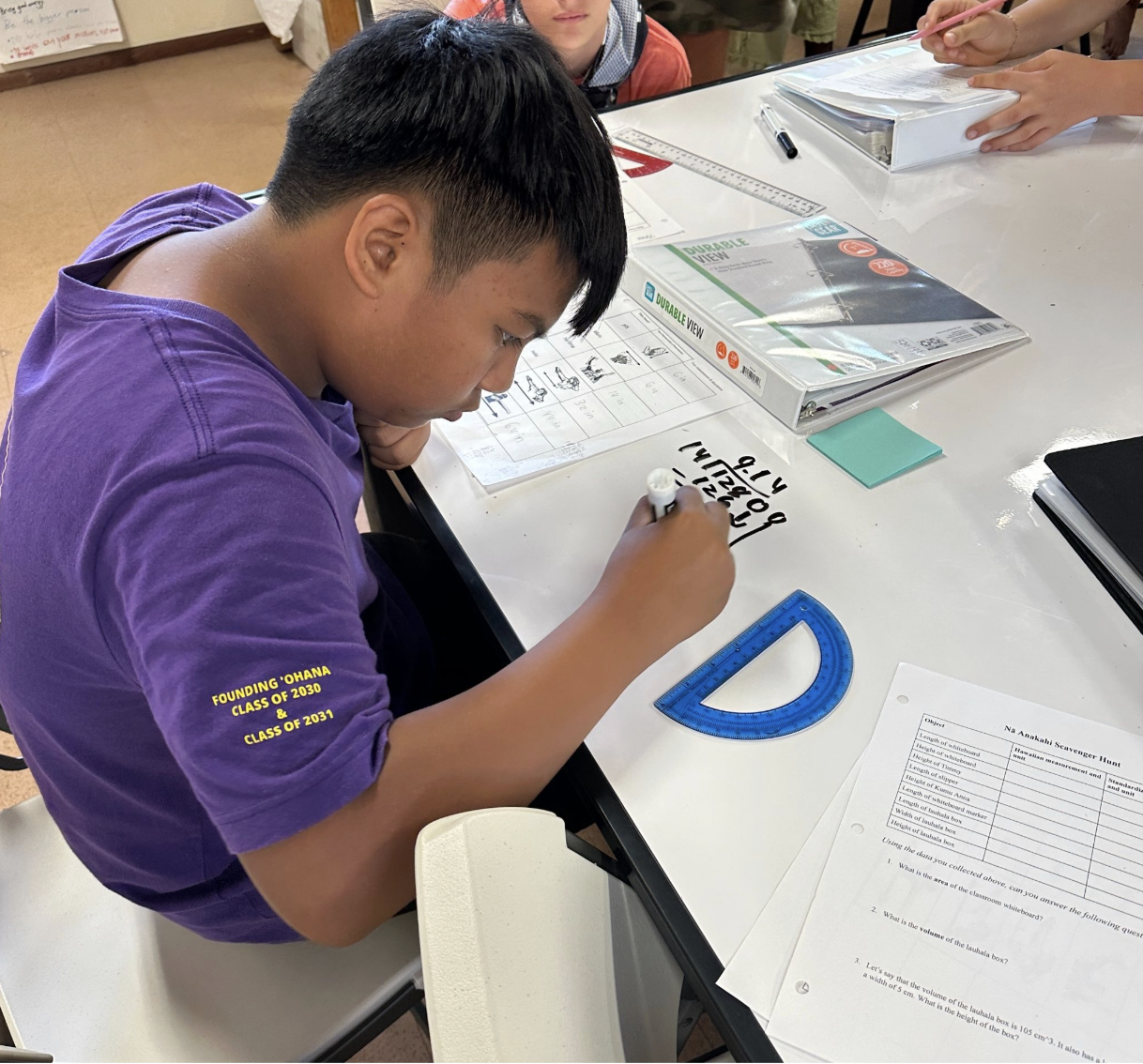
Student-Driven, Real-World Learning
At Namahana, learning begins with pilina, the relationships we build with people, place, and culture. Rooted in these connections, our Learning Goals extend beyond traditional standards, combining academic excellence with personal growth, social responsibility, and ʻāina-based experience. Learning is personal because it begins with relationship; we first understand the learner, then shape learning around them.
This personalized approach builds beyond the Hawaiʻi Common Core Standards. It then extends learning into real world understanding, critical thinking, and meaningful connection. Through daily reflection and applied experience, students discover who they are, how they learn, and how their knowledge can serve their community and the world.
Our Learning Goals

Knowing How to Learn
The goal is to be curious, with a drive to explore and be open to doing hard work; to understand that there are many ways of learning, knowing and making meaning in the world. It includes valuing learning from and with others inside and outside of school.
-
What am I curious about?
What do I want to know about it?
How can I learn about it?
Where will I learn about it?
With whom can I learn about it?
-
Students develop Personalized Learning Plans that guide them to reflect on how they learn best, identify the resources that support them, and demonstrate their strengths and curiosities through what they choose to explore. They exhibit their learning through hands-on, experiential work that brings ideas to life, with research serving as a supporting tool rather than the destination. This process strengthens their agency and prepares them for our high school model, where they take increasing responsibility for leading their learning.

Personal Qualities
The goal is to strive to be the best person you can be; to demonstrate respect and empathy for others, take responsibility, be self-aware, and act with courage and compassion; to reflect on your achievements and progress; to strive for personal and civic improvement through understanding history, culture, and multiple perspectives that shape identity and character.
-
What do I bring to this process (strengths/skills)?
How can I be stronger and healthier (well-being)?
How can I persevere at this?
How can I better organize my work?
How can I demonstrate respect?
How can I better manage my time?
How can I empathize more with others?
How can I be more self-aware?
How can I look out for my health and well-being?
How can I work cooperatively with others?
How can I communicate honestly about this?
How can I take on more of a leadership role?
How can I be responsible for this?
How can I enhance my community through this?
-
Through projects such as Who Am I and Who I Want to Be, haumāna reflect on their strengths, well-being, and growth. They practice goal-setting, planning, and time management as part of their daily classroom routines. Our Restorative Justice process provides a supervised space for peer mediation, where students learn to resolve conflict, communicate honestly, and strengthen their lāhui with empathy and respect.
Quantitative Reasoning
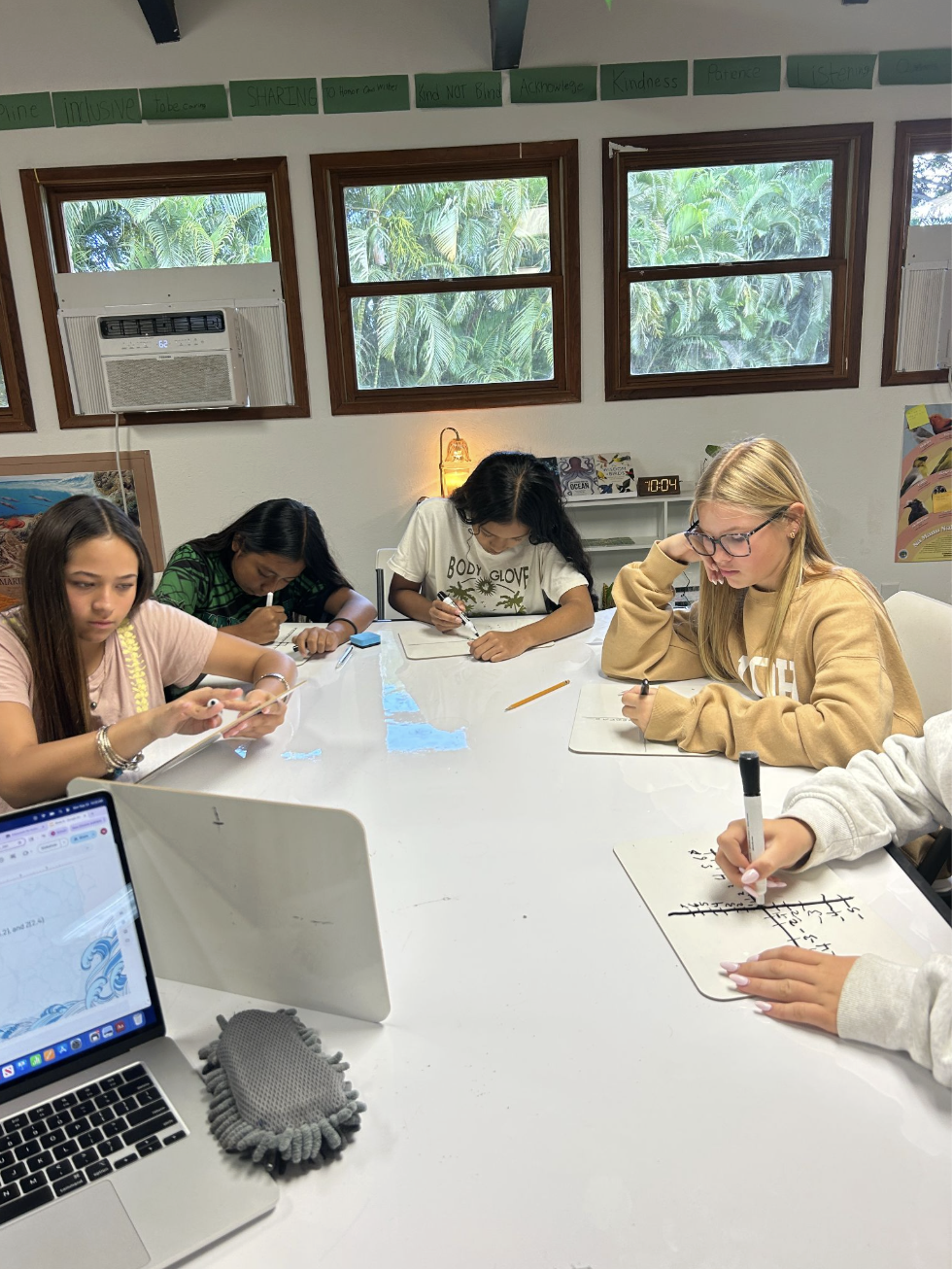
The goal is to learn to use the skills, concepts and logic of mathematics to understand and interpret situations, solve problems and take action in life, learning and work.
-
How do I measure, compare, or represent it?
How can I use numbers to evaluate my hypothesis?
What numerical information can I collect about this?
How can I represent this work using a table, graph, or formula?
How can I interpret this formula or graph?
How can I measure its shape or structure?
What trends do I see? How does this change over time?
What predictions can I make?
Can I show correlation?
-
Students create scaled models of buildings, measure and build 3D structures, and collect scientific data on coastal erosion at Kahili. They represent their findings through tables, graphs, and formulas, then interpret the patterns to understand what is happening and why. In using numbers to investigate real questions, they learn to make grounded, informed decisions. Our advanced groups extend this work further, experimenting with innovative approaches such as mobilization of learning to deepen their quantitative reasoning and connect math to the world around them.
Empirical Reasoning
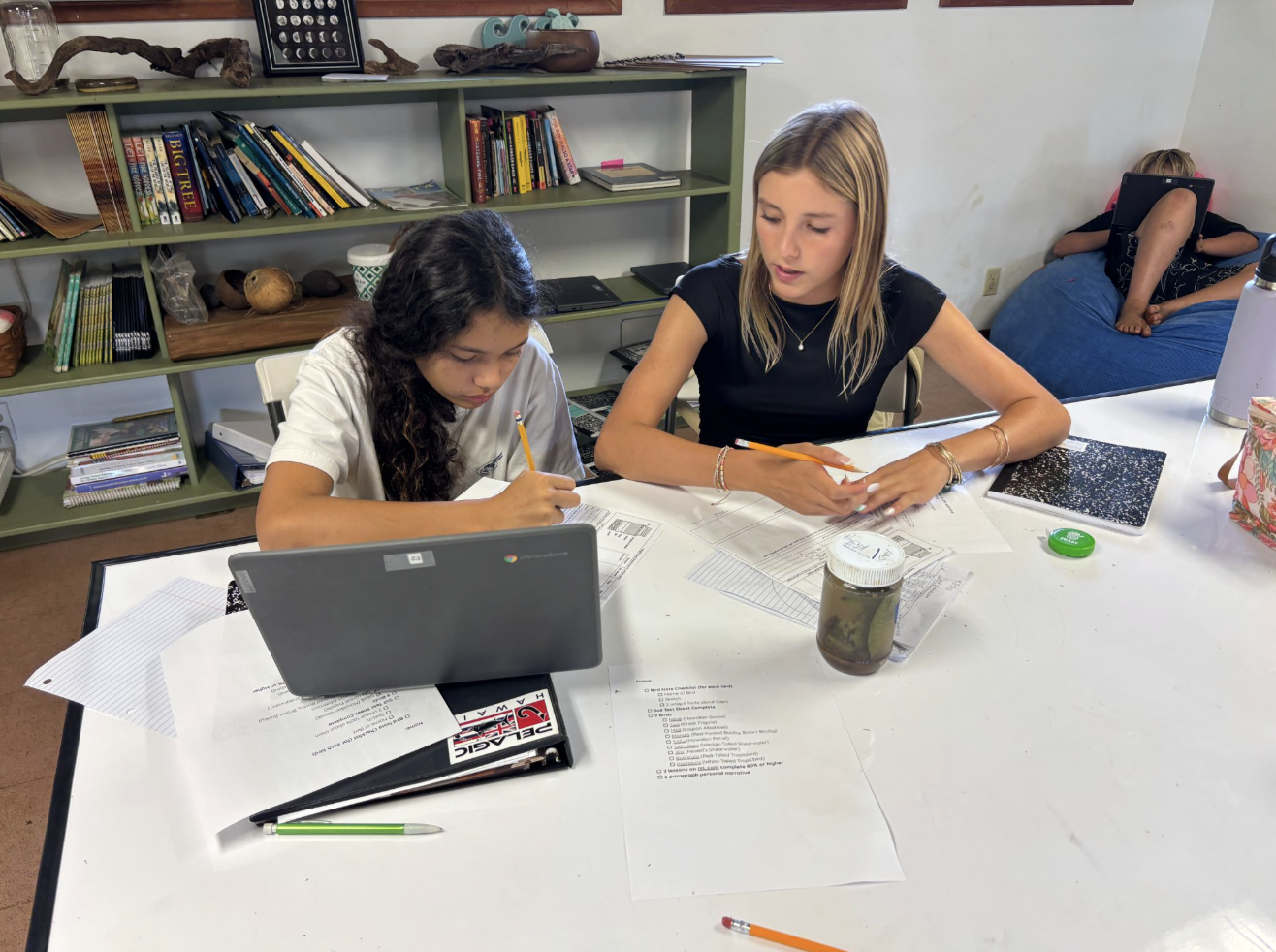
The goal is to learn through experimentation; to use evidence based on observation, experience, and a logical process to understand, make decisions, and to evaluate hypotheses. This includes drawing on scientific inquiry, data collection, and the use of evidence to test ideas and deepen understanding of the natural world.
-
How do I prove it?
What idea do I want to test?
What has other research shown?
What is my hypothesis?
How can I test it?
What information do I need to collect?
How will I collect the information?
What will I use as a control in my research?
How good is my information?
What are the results of my research?
What conclusions can I draw from my research?
How will I present my results?
-
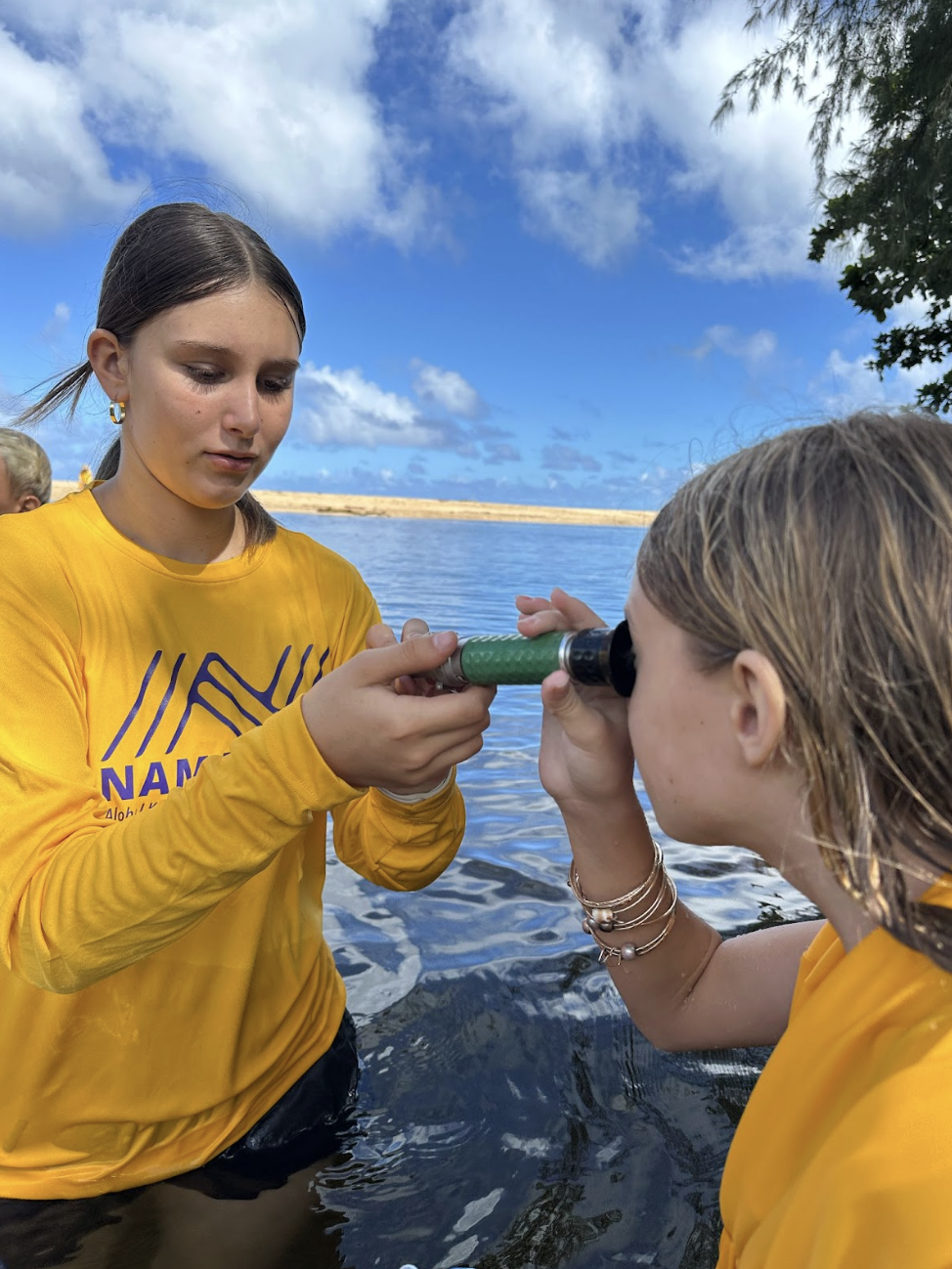
At Ulu ʻĀina, students collect and compare scientific readings over time, and use this evidence to test their hypotheses. They also utilize technology and tools to gather data, analyze results results based on what they on what they observe in the natural world. This may include measuring pH and ammonia levels, analyzing selenity with refractometers or evaluating coastal erosion and shoreline change.
Communication
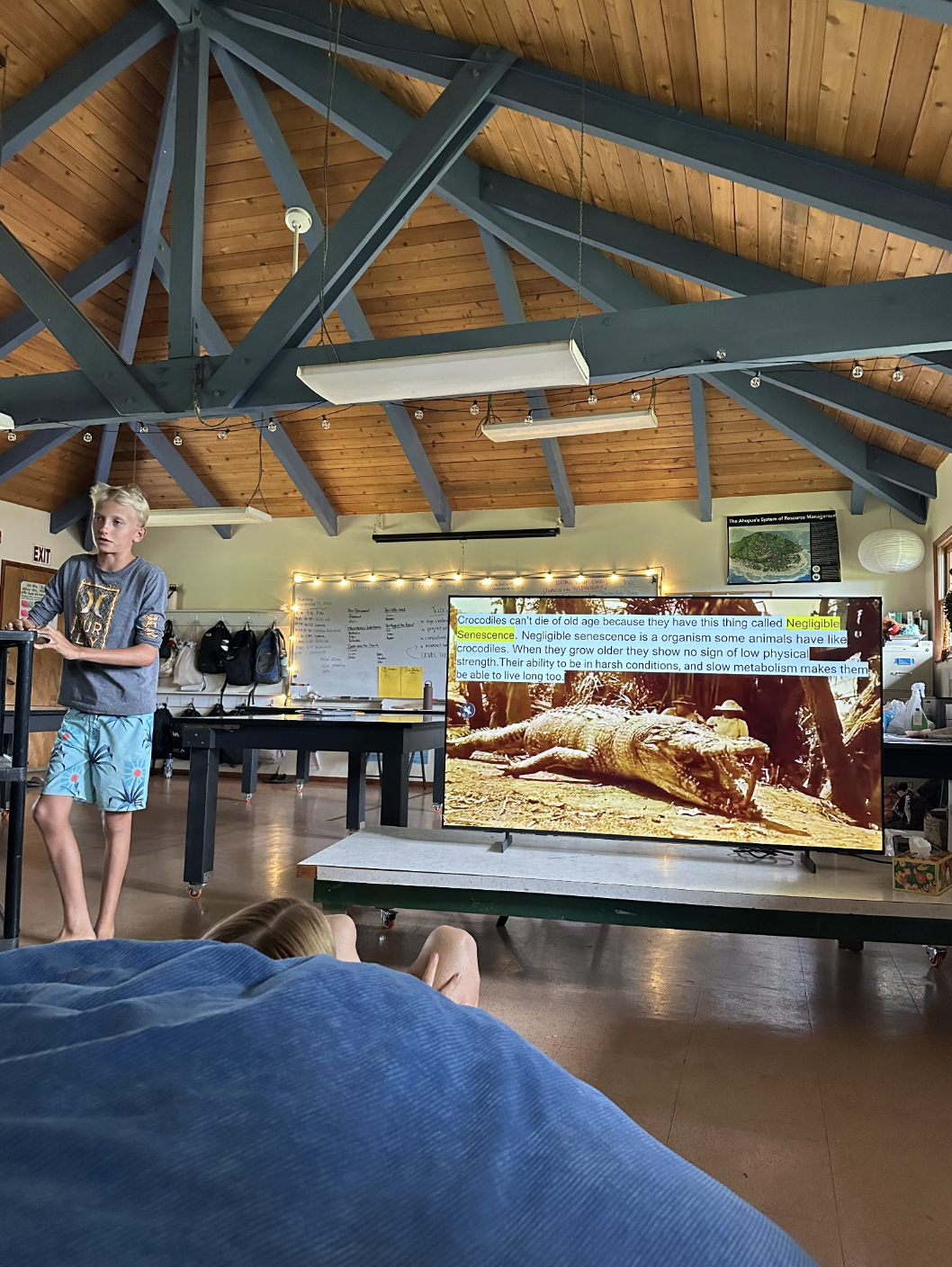
The goal is to learn to be a great communicator; to understand your audience; to write, read, speak, and listen well; to use technology and artistic expression (visual arts, music, dance, and theater) to communicate. It includes, where possible, another language, and emphasizes the ability to write clearly, speak confidently, and present ideas effectively across multiple forms of expression.
-
How can I speak about it?
Who is my audience?
What is the main idea I want to get across?
How can I write about it?
What can I read about it?
Whom can I listen to about it?
How can technology help me to express it?
How can I express it creatively?
How can I express it in another language?
-
In the “Who Am I” exhibitions students prepare and present to peers, kumu and mākua (parents) a 5-10 minute presentation about their family history, passions and aspirations.

Social Reasoning
The goal is to learn to see diverse perspectives; to understand social issues, to explore ethics; to analyze and understand social systems and to look at issues historically and culturally. It includes learning to take responsible action to address inequity, while engaging in collaboration, self-direction, and reflection to better understand one’s role in community and society.
-
What do I notice that I want to change?
What would need to happen for that to change?
What can I do?
What are other people’s perspectives on this?
How do diverse communities view this?
Who cares about this? To whom is this important?
What is the history of this? How has this issue changed over time?
Who benefits and who is harmed through this issue?
What do people believe about this?
What social systems are in place around this?
What are the ethical questions behind this?
What do I think should be done about this?
-
Students are challenged to understand both local histories and global perspectives, and how their actions affect the community. Students are also encouraged to engage in civic responsibility such as providing testimonies for the DOW to advocate for water rights. Through these experiences, they learn to analyze social systems, consider diverse viewpoints, and take responsible action in their community.

FAQ
-
Namahana School does not use a traditional ranking or grading system. Instead, we assess evidence of learning through the Big Picture Learning Framework, which includes the K–8 Scaffolded Frames and the International Big Picture Learning Credential for grades 9–12. These developmental frameworks align with the Hawai‘i Common Core Standards and include criteria and indicators created by Big Picture Learning educators and researchers from the University of Melbourne to measure student growth over time.
Learning is evident in the sources of evidence students produce within each learning goal area. Examples for Quantitative Reasoning include math tests, worksheets, quarter projects, and empirical reasoning labs. Examples for Communication include writing assignments, “Who Am I” presentations, autobiography chapters, and argumentative essays.
Our weekly schedule supports this process: students make learning plans on Monday, learn and practice new skills Tuesday, apply their skills in real-world and meaningful ways Wednesday, deepen those skills Thursday, and reflect on their learning Friday.
-
We do not have an online portal at this time. Student progress is tracked through personalized learning plans created collaboratively by each student, their kumu, and family. These plans identify learning goals in areas such as Communication, Quantitative Reasoning, and Personal Qualities.
During learning plan meetings, you, your child, and their kumu will review progress, reflect on areas for growth, and adjust goals. This process builds student ownership and prepares them for our high school model, where they take increasing responsibility for leading their learning.
-
Each student has a personalized learning plan that helps them co-construct their goals. In Quarter 2, Quantitative Reasoning and Communication learning times are being designed to match students’ strengths, learning styles, and goals.
These courses take place four times a week and may involve multiple teachers based on groupings and observed learning trends. Students benefit from flexible learning groups that allow collaboration and focused instruction across disciplines.
-
Namahana’s model is built on personalization. Each student’s learning plan is co-created with their kumu and family to reflect their goals, strengths, and interests. Teachers continuously adapt instruction to support those needs through small group learning, individualized projects, and reflection meetings.
-
Learning goals help identify tangible student objectives, including traditional math pathways. Beginning next quarter, all students will use the IXL math curriculum for ongoing practice and enrichment.
Algebra 1 is a graduation requirement at Namahana School. Our plan is for students to complete this credit by the end of 9th grade. As students advance, some courses will be offered directly through Namahana, while others—depending on student interest—may be taken as dual-credit college courses.
Namahana meets all Hawai‘i graduation requirements and prepares students for their chosen path, whether college, career, or both.
-
Creative Activation is our innovative enrichment program that goes beyond traditional electives. These hands-on experiences expose students to diverse disciplines and skills through community partnerships, “activating” their potential through exploration.
Quarter 1 offerings include art, theatre, speech and debate, music (ukulele), and gardening/landscaping, with students receiving either their first or second choice.
As we grow, we’ll expand Creative Activation through a makerspace supporting activities like ceramics and woodworking. Each quarter, students rotate through new areas, ensuring broad exposure to many disciplines.
This program reflects our belief that learning happens best when students are actively engaged and connected to their community.
-
The guiding principles of Namahana School are Aloha ʻĀina, Aloha Kanaka, and Aloha i ke Ao.
The Ola Framework includes six health measures drawn from the Big Picture Living model and the American College of Lifestyle Medicine: Pilina (relationships), Hānai (nutrition), Mana (movement), Hoʻōla (rest/sleep), Hoʻomaha (stress management), and Pono (avoiding toxic substances).
In Quarter 1, students explored one measure per week as a foundation for continued growth. Future quarters will include lessons aligned to these measures, supporting student well-being—because healthy students learn best.
-
Each student at Namahana School is part of a small ʻohana group of 15 to 20 students that continues as a cohort with the same faculty advisor through grades 7 - 9 and again through grades 10 - 12. This ensures that each student is always mentored by at least one adult who is committed to their success and helps guide their personal learning, along with a group of peers who become a close-knit second family. These relationships often last a lifetime.
Academic News

Clayton Christensen,
Harvard Professor